
Why the Boston Celtics Should Be a Favorite to Win the NBA Finals
Brady Cole, March 2026
The Boston Celtics have built a championship case on something that always translates in the postseason: elite efficiency. What makes this season even more impressive is that they’ve done it without Jayson Tatum the entire year. Boston has hovered near the top of the league in offensive rating (around 120 points per 100 possessions), a benchmark that historically aligns with true contenders. Jaylen Brown has elevated his game into a legitimate No. 1 option role, averaging roughly 29 points per night with improved efficiency and playmaking. Meanwhile, Payton Prithcard, Derrick White, Neemias Queta, and the new addition of Nikola Vucevic have accepted larger roles with Tatum being out supplying the Celtics with much needed versatility. The ball movement, three-point volume, and overall net rating profile scream contender.
A major reason for that sustained dominance is head coach Joe Mazzulla. Since becoming Celtics head coach, Mazzulla has compiled a 256-101 regular-season and post-season record, a .717 winning percentage that ranks among the strongest starts for any coach in modern NBA history. What makes that even more remarkable is the context. This was a team completely revamped from last season, losing and trading multiple key players who played . Yet the Celtics didn’t regress, they refined their identity. That level of continuity and buy-in speaks volumes about both the locker room and the system.
Tons of credit also belongs to Brad Stevens for assembling a roster built to win now without compromising the future. Stevens managed to supply his coach with a winning team while simultaneously getting under the second apron, a critical detail under the NBA’s new CBA. The second apron introduces severe roster-building penalties, including frozen draft picks and trade limitations that can quickly close a championship window. By staying below that threshold, Boston retains flexibility while still ranking near the top of the league in defensive efficiency, three-point differential, and overall depth metrics. That balance between aggression and sustainability is what separates good front offices from great ones.
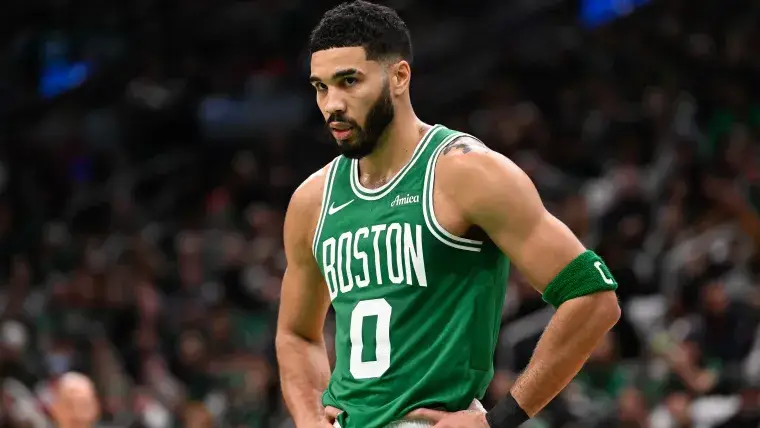
The final piece, and perhaps the most important, is the return of Jayson Tatum. It will be noted that Tatum might not be the exact player he was pre-injury, especially early in his return. But this season has made one thing clear: the Celtics do not need him to score 30 points per game to win. What they need is his presence, defensive versatility, rebounding, and ability to close tight playoff games. Adding a player of his caliber to a team that is already one of the most efficient in basketball only enhances spacing and lineup flexibility. Rather than carrying the full offensive burden, Tatum can step in as a great impact player offensively and defensively, attacking mismatches, facilitating movement, and guarding multiple positions at a high level.
Yes, the Oklahoma City Thunder may have a better roster on paper and arguably the deeper overall team. And this remains an opinion, not a guarantee. But history consistently shows how difficult it is to survive a treacherous Western Conference bracket. Since 2000, only the Los Angeles Lakers, Miami Heat, and Golden State Warriors have managed to repeat as champions, underscoring how rare sustained dominance can be. The Thunder would likely have to battle multiple 50-win teams just to reach the Finals. Meanwhile, Boston’s path through the East appears comparatively more manageable. When combining elite efficiency, coaching stability, and the anticipated return of a superstar who doesn’t need to dominate the scoring column to dominate the game, the case is strong: the Celtics deserve to be considered the favorite, even if the margin is slim.
Eric Canha-Imagn images

(Matt Stone/Boston Herald)
Create Your Own Website With Webador