
Three NBA "Pretenders"
Breakdown of three NBA teams near the top of their respective conference that we don't see as true Championship contenders. All are filled with flashy star power and media attention, but have holes that can not be overlooked. Three teams made the list; check out who officially made the cut here.
Brady Cole, March 2nd, 2026
Philadelphia 76ers: Blown Market Value and Thin Construction
The Philadelphia 76ers are in a curious spot this year, their record is middling yet competitive (hovering around a Play-In seed), but the dependency on Tyrese Maxey and instability of the roster suggests deeper structural problems. Current stat lines show Maxey averaging ~38.4 minutes per game and leading the team with 29.1 points and 6.7 assists per game, an elite scoring profile but also one that highlights burdensome usage for a guard without top-tier defensive support. That kind of workload, among the highest in the league, typically correlates with performance deterioration in late games and the playoffs, where opponents clamp down on your primary option after watching countless tape. Excessive dependence on a single playmaker puts the Sixers’ offensive sustainability into question when defenses converge or plan specifically to neutralize Maxey’s strengths.
One of the most controversial decisions this season has been the trade of Jared McCain, who is now flourishing in a larger role with the Oklahoma City Thunder. McCain’s improved shot selection and efficiency in OKC’s system contrasts sharply with what Philly received in return, suggesting a mis-valuation by the front office that may have cost them valuable depth and back-up scoring. That’s especially relevant considering the injury track record of Joel Embiid — who missed significant time in recent seasons — and remains a looming question mark for Philly’s championship aspirations. Multiple reports note Embiid’s ongoing knee management issues this year and recurring missed games due to injury, undermining continuity and chemistry.
Add to that the fact that the Sixers often play at a lower pace than many contenders (around 19th in pace), meaning they score fewer transition points and rely more on half-court sets that can stagnate without a second true creator beside Maxey. Without Embiid consistently available and with limited bench production from the McCain trade, their playoff viability depends too heavily on Maxey staying healthy and unguarded. A championship team should be multi-dimensional, not a one-man show with gaps on defense and poor roster leverage. Until Philly proves they can balance scoring load, stay healthy, and generate wins outside of Maxey’s output, they fit the pretender profile more than that of a deep contender.
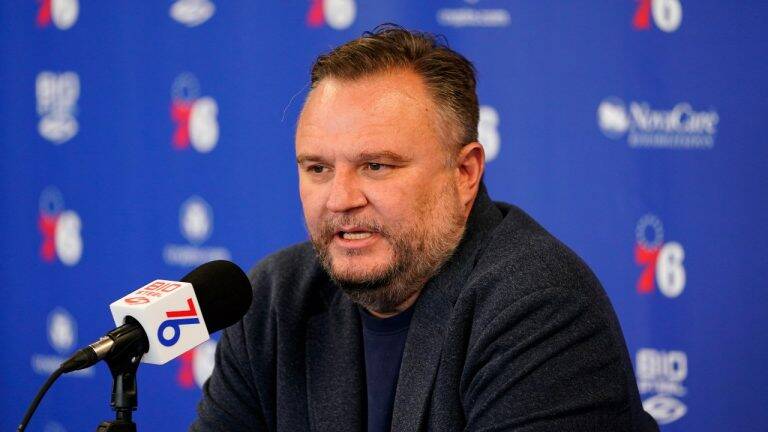
Daryl Morey
(AP Photo/Matt Slocum/AP)
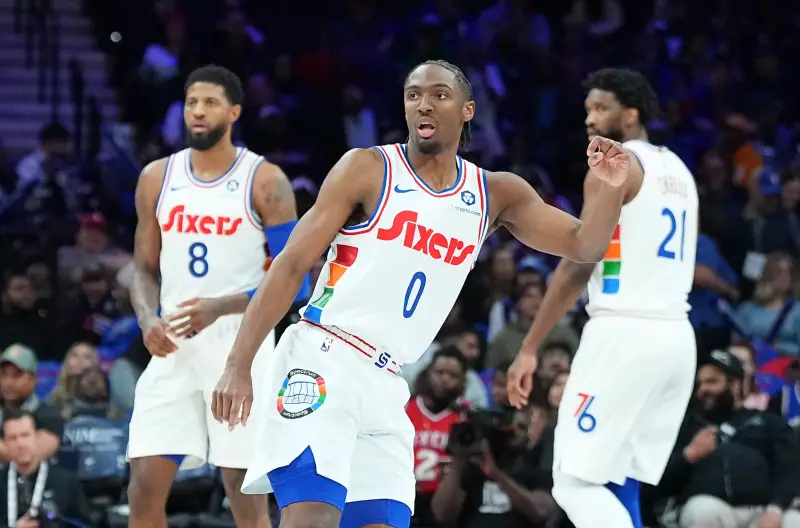
(Paul George, Tyrese Maxey, Joel Embiid, Philadelphia 76ers | Mitchell Leff/GettyImages)
Los Angeles Lakers: Defensive Reality Check
The Lakers’ record (36–24) positions them comfortably in the West playoff race, but the advanced analytics wave a caution flag. Their offensive rating (~116.5) sits inside the top 10, powered by star creation and high pick-and-roll efficiency. Defensively, however, the numbers are far less flattering: a defensive rating hovering around 117 places them in the league’s bottom tier. Since 2000, virtually every NBA champion has finished top-10 defensively. The Lakers currently aren’t close to that threshold.
Lineup data sharpens the concern. When Luka Dončić, LeBron James, and Austin Reaves share the floor, the Lakers’ defensive rating balloons past 120 points allowed per 100 possessions in meaningful sample sizes. While the trio produces efficient offense, the net rating in those stretches hovers near neutral because opponents score just as easily. That’s a dangerous trade-off in playoff basketball, where possessions slow and defensive stops dictate series outcomes.
Individually, several rotation players carry defensive ratings north of 115, highlighting systemic breakdowns in perimeter containment and help rotations. Opponents shoot efficiently from three and generate high-quality looks at the rim against Los Angeles’ most frequently used lineups. The Lakers can score with anyone, but their inability to consistently get stops creates a ceiling problem. Flashy offense may win regular-season games, but history is clear: without top-tier defense, championships remain out of reach. Right now, the Lakers’ numbers resemble those of a high-powered pretender rather than a balanced contender.
Although JJ Redick has stepped into a prominent leadership role, he has not yet proven himself over the grind of a full NBA season or deep playoff run. Coaching at the highest level requires adjustments, adversity management, and tactical evolution that only time can validate. At the same time, the roster construction around him has been subpar, lacking the depth, two-way versatility, and consistent shooting typically needed to build a true championship contender. Until both his coaching résumé strengthens and the front office assembles a more balanced squad, it will be difficult to fairly judge his ability to guide a team to the title.
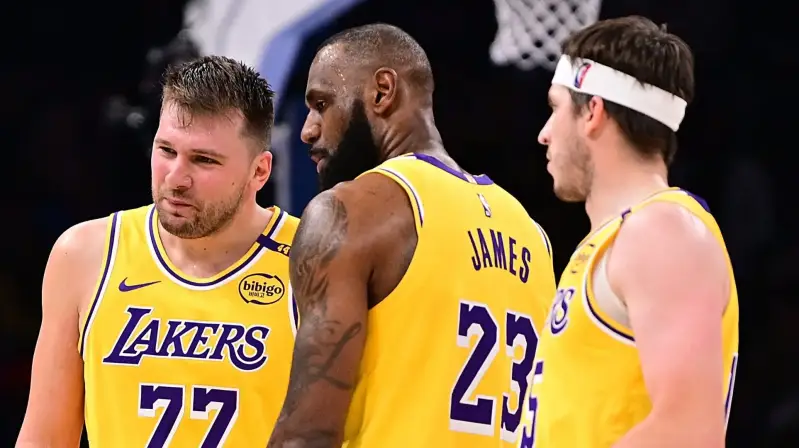
(Getty Images)
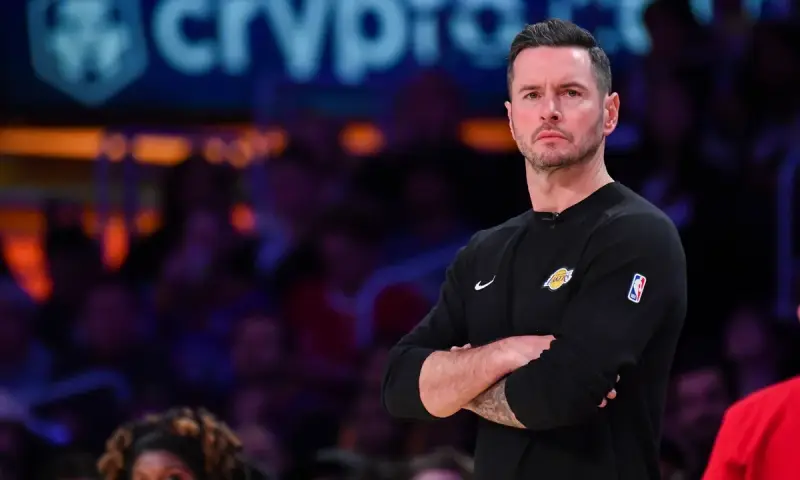
(Juan Ocampo/NBAE/Getty Images)
Minnesota Timberwolves: High Hype, Need Playoff Elevation
For all the excitement around the Minnesota Timberwolves, it’s hard to shake the feeling that they’re more pretenders than true contenders, at least by historical standards. Most NBA champions dominate on one side of the ball, finishing the regular season with a top-5 offensive or defensive rating. Only a few outliers have bucked this pattern, and even they leaned on superstar performances or clutch playoff moments. Take the mid-90s Houston Rockets: led by Hall of Famers Hakeem Olajuwon and Clyde Drexler, with key contributions from Robert Horry and Kenny Smith, they still needed the clutch “Kiss of Death” 3-pointer from Mario Elie in Game 7 of the Western Conference Semifinals just to advance. Success in these outlier cases is never straightforward — it’s earned in the margins.
Other examples reinforce the point. The Dallas Mavericks in 2011 required a 22–5 run late in Game 2 of the NBA Finals against the Miami Heat to swing momentum and avoid a 0–2 hole, ultimately winning the series in six games. Similarly, the 2006 Miami Heat relied on First Team All-NBA Shaquille O'Neal and Second Team All-NBA Dwyane Wade to carry them past the Dallas Mavericks, with Wade averaging 34.7 points per game in the Finals. The lesson is clear: teams that don’t dominate the stat sheet need extraordinary superstar performances or playoff heroics to reach and win a championship.
The Western Conference only compounds the challenge. It’s a gauntlet of 50-win teams, elite MVP-caliber talent, and units that are top-10 on both ends of the court, making every series a battle. For the Timberwolves to break through, Anthony Edwards and Julius Randle will need to elevate their games in a historic way. Edwards may even have to reach the level of a Finals‑dominant Dwyane Wade, with elite efficiency, late-game dominance, and two-way impact, while Randle must improve both scoring and defensive consistency in high-pressure moments. If they can achieve that leap, the Timberwolves could finally convert regular-season promise into real championship contention — but until then, the historical precedent suggests they remain a team full of hype, not proven postseason power.
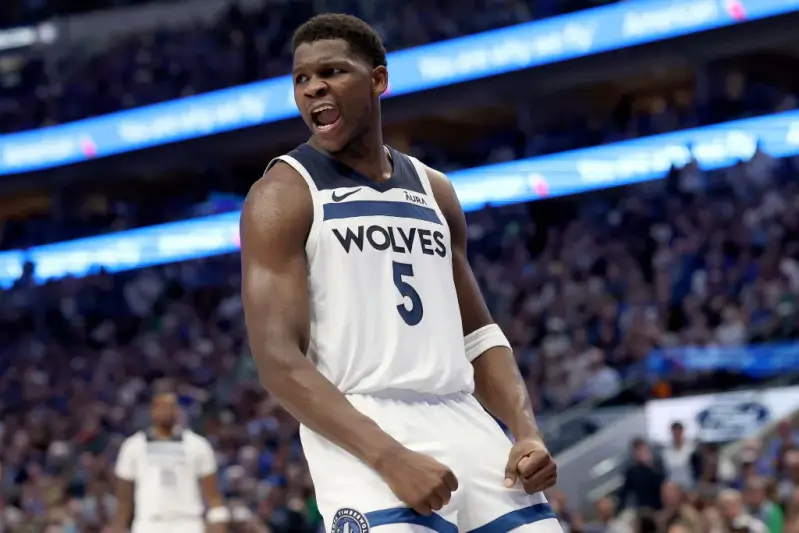
(Getty Images)
Create Your Own Website With Webador